

Ancient buildings are often silent witnesses to history, and in a city like Edinburgh, every effort is made to preserve these architectural treasures for future generations. Religious buildings hold a special place, often possessing unique designs and fascinating stories. St Andrew’s Orthodox Church is a prime example, rightly considered one of Edinburgh’s most important shrines. Interestingly, its story begins not with its current community, but with the founding of St Cuthbert’s Chapel in 1756. Let’s delve into its remarkable history. Learn more at edinburgh-future.
The Shrine’s Early History
In the 18th century, St Cuthbert’s Chapel occupied a large site during a period of active growth for Edinburgh’s population. The chapel was later elevated to a parish church, and a parish school was subsequently established on its grounds. Over time, however, the congregation sadly began to dwindle. Eventually, the church building was acquired by the University of Edinburgh.
The Birth of a New Church
The year 1948 marked the founding of the St Andrew’s Orthodox community. This new community eventually took over the former chapel building. The new church became known for its simple, cross-shaped (cruciform) layout.
Parishioners and Rector
It is worth noting that the new church’s initial parishioners were predominantly former Polish servicemen, and the liturgical language at the time was Church Slavonic. In 1984, Archimandrite John Maitland Moir was appointed rector of the church. A Scot who had converted to Orthodoxy from the Episcopal Church, he was instrumental in changing the language of the services to English.
A New Chapter
In 2003, the community became the owner of the buildings that once belonged to the old parish school. By 2012, the church had seen a significant increase in attendance, with the site visited by about 250 people on average daily. Interestingly, in addition to English-language services, parishioners can now also attend liturgies in Greek, Romanian, and Church Slavonic.
Architecture and Interior
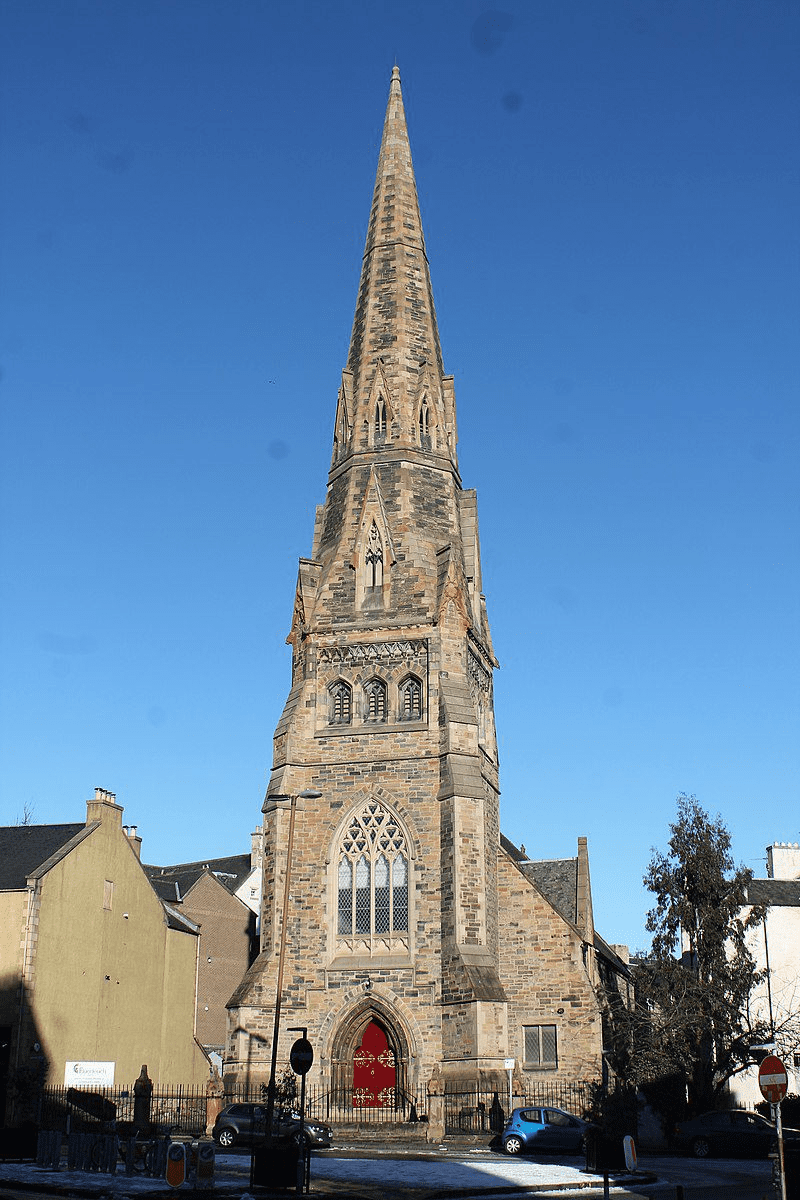
Architecturally, the building is one of the oldest surviving religious structures in Edinburgh. The north-east corner of the shrine is adorned with a low tower topped by a small spire, and its exterior is constructed from rubble stonework. The facade is symmetrical and features a small porch. The interior is arranged over two floors and retains a great number of its original features and details. These include the pulpit, the organ loft, a gallery, and a partially glazed narthex.