

Architecture is what truly sets a city apart, and it’s easy to see why. Every city’s development is shaped by its chosen architectural styles, often resulting in a unique blend. Main streets, in particular, are typically designed to create a unified and impressive architectural statement. When a city is built strictly adhering to the rules of a single style, it stands out dramatically from other towns. Learn more at edinburgh-future.
Among the diverse architectural features of a city, bridges deserve a special mention. These structures are not only essential for making travel easier and more convenient, but they also serve as stunning decorative elements that enhance the urban landscape.
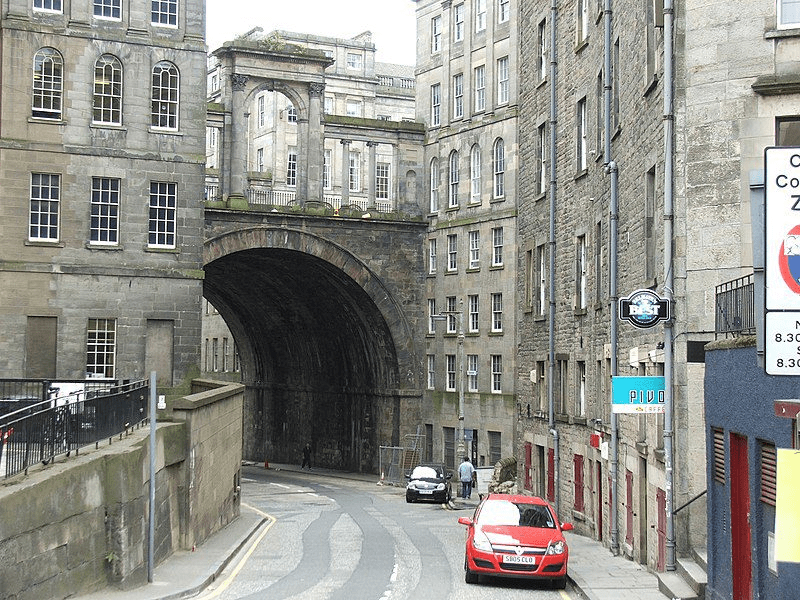
Regent Bridge is perhaps Edinburgh’s most famous road bridge. Built in the 19th century, it stands as a prime example of Neoclassical design. This architectural choice, quite remarkable for its time, was driven by the modernisation and significant expansion of the medieval city.
An Inconvenient Route
In the early 19th century, the main route into Edinburgh was notoriously difficult, causing widespread frustration. The only reliable way to reach the city was via the great London road. However, to say the journey was uncomfortable would be an understatement.
The Solution
The approach to Edinburgh from the south involved navigating a series of narrow and awkward streets. This entrance was completely at odds with the city’s inherent elegance.
However, 1814 marked a turning point with the plan for a magnificent new entrance via Calton Hill to Princes Street. This new route had to cross the deep ravine of Low Calton. At the time, the area was filled with old, poorly constructed streets. To connect Calton Hill with Princes Street, these buildings had to be demolished. An elegant arch, which would become known as Regent Bridge, was designed to span the gap.
Interestingly, discussions had been ongoing about building a new prison on Calton Hill. This new road was also intended to provide convenient access to the proposed facility.
The Backstory
To understand the bridge’s history, we must look at the events that led to its creation. In 1813, the Lord Provost of Edinburgh, Sir John Marjoribanks, pushed forward the ‘prison project’. At the same time, he presented the plans for the bridge to the city magistrates. A feasibility report from experts was also included with the documentation. Despite the project’s complexity, it was approved.
Construction
Construction of the bridge began in 1816 under the supervision of engineer Robert Stevenson. The work was completed in 1819. Regent Bridge soon became regarded as a masterpiece of the Greek Revival architecture of the era.
The bridge features a grand semi-circular arch. Its northern face stands at a height of 45 feet, while the southern face is slightly over 64 feet high. This difference in height is due to the ground sloping downwards to the south. The roadway itself is flanked by coffered arches, and the main arch is adorned with two ornamental triumphal arches, supported by elegant Corinthian columns.
The Grand Opening
The official opening ceremony for Regent Bridge took place on 18 August 1819. The event was timed to coincide with a visit to the city by Prince Leopold of Saxe-Coburg, making the grand opening a truly momentous occasion.