

Sadly, flying doesn’t always guarantee a completely safe journey. No matter how advanced modern engineering or innovative techniques become, they can’t ensure absolute protection against accidents. Sometimes the human factor comes into play. Other times, technical faults occur. Even machines aren’t immune to failure, and when they break down, the outcome can be disastrous.
Read more on edinburgh-future.
Edinburgh’s Aviation Tragedies
Throughout its history, Edinburgh has faced multiple aircraft disasters. Each incident was a true tragedy, destroying more than just metal and machinery.
The greatest loss is human life, which always suffers first in an air disaster.
The Accident that Cost Many Lives
In 1965, a disaster unfolded that went down as one of the deadliest in the United Kingdom.
On 27 October 1965, the Vickers Vanguard 951 crashed while attempting to land at Heathrow Airport. All 36 people on board tragically lost their lives.
About the Aircraft
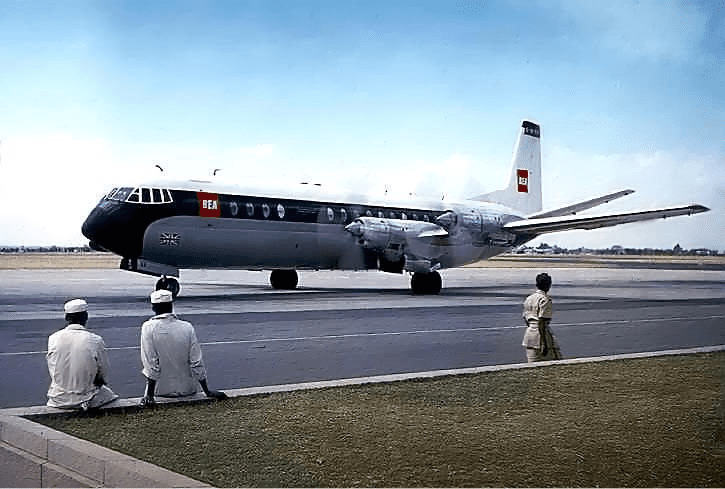
The Vickers Vanguard 951 was a turboprop airliner built in 1959. Designed for short- and medium-haul flights, it was the fastest aircraft in its class at the time.
The Tragedy Just Steps from Landing
On 26 October 1965, the aircraft departed Edinburgh on a scheduled flight to Heathrow. The journey was uneventful until the approach to London.
As the plane prepared to land, it encountered dense fog, with visibility reportedly down to just 50 metres.
During the first attempt, the aircraft overshot the runway and entered a holding pattern. After spotting another aircraft landing, the pilot made a second approach. On that final attempt, the plane plummeted onto the runway and caught fire, killing everyone on board.
Initial Findings
A full investigation followed, revealing several key factors. Visibility at the time was well below the minimum required for a safe landing. Yet, there was no evidence the pilot deliberately breached those limits.
The Fatal Error
Investigators concluded that pilot error was the primary cause. Contributing factors included fatigue, stress, incomplete information, and procedural mistakes during a fog landing.
On the final approach, the wrong flap settings and an incorrect descent rate led to a steep dive onto the runway.
Lessons Learned
The 1965 BEA Vanguard crash remains one of the UK’s most devastating air disasters. It shows that even when a flight starts smoothly, conditions can change in an instant and turn deadly.
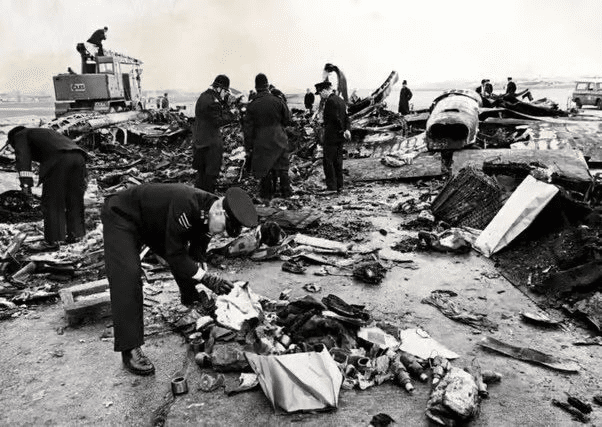
This tragedy underlines the critical importance of pilot training. Studying every detail—from take-off to landing in fog, rain or snow—must be mandatory. Lack of experience, knowledge, and clear guidance on handling extreme weather has contributed to several Edinburgh-area crashes, including the Short 360 crash on 27 February 2001.
Ultimately, investigations often reveal that pilots were unaware of the correct procedures in extreme conditions. Such gaps can lead to catastrophic loss of life.