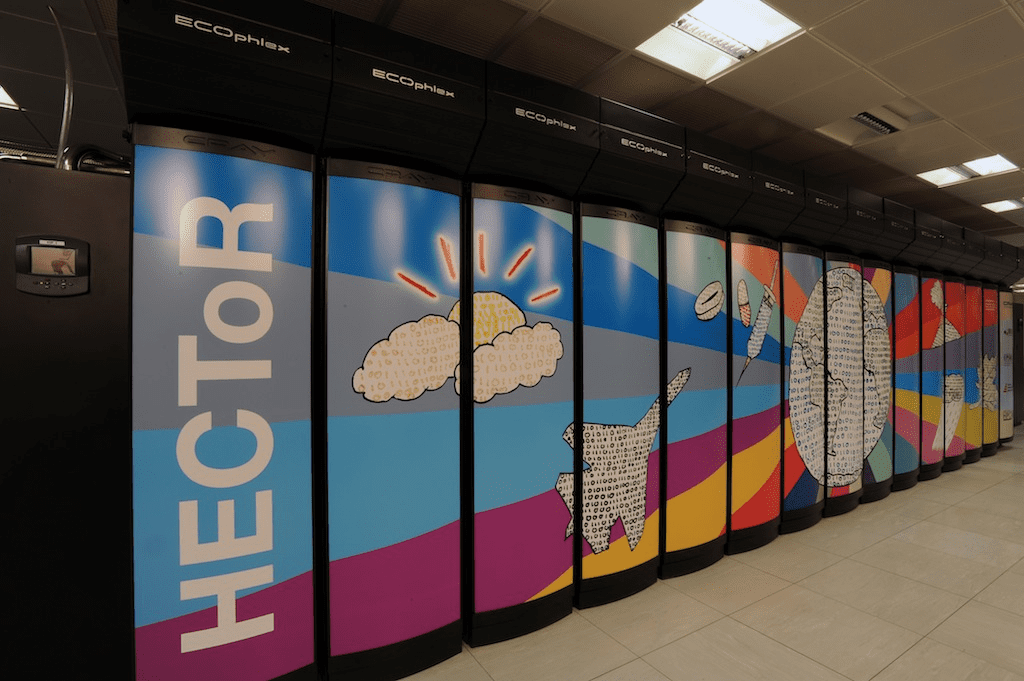
In its prime, HECToR was one of Britain’s most formidable scientific “brains.” Its sheer scale and processing power granted researchers access to computations that were once deemed impossible, driving breakthroughs in medicine, engineering, and green energy. Read more on edinburgh-future.
The Rise and Evolution of HECToR
The High-End Computing Terascale Resource, better known as HECToR, was launched at the University of Edinburgh in 2007. Interestingly, while the initial setup costs came in at roughly £59.4 million—about £5.6 million under budget—the price of keeping the lights on proved to be a different story. Annual running costs surged from £5.4 million to £8.2 million, sparking concern among project leaders. Professor Arthur Trew noted that the primary culprit was the drastic spike in UK electricity prices, which nearly doubled compared to original estimates.
Despite these financial headwinds, HECToR became a cornerstone of global research. In 2009, an international team from the universities of Manchester, Oregon, and Yale harnessed its power to create a groundbreaking biomechanical model of dinosaur movement. Ranked among the top 20 supercomputers in the world at the time, HECToR allowed scientists to simulate the complex gaits of massive, swift creatures—both living and long-extinct. The project even reached the public, with enthusiasts able to download free software to “build” their own dinosaurs on Windows, Mac, or Linux.
Innovation wasn’t limited to heavy calculations. In 2011, the EPCC centre launched the HECToR User app for iPhone and Android. This allowed researchers to monitor the supercomputer’s status on the go, track job queues, and receive real-time notifications when their tasks were completed. The app was a product of the “Tiny Projects” initiative, a scheme designed to give staff the freedom to experiment with new ideas and sharpen their technical skills.
By the winter of 2012, HECToR underwent a massive upgrade that took its performance to another level. Its processing power increased tenfold, cementing its status as a global heavyweight. This sprawling industrial complex at the University of Edinburgh boasted 90 terabytes of RAM and the ability to perform nearly 800 quadrillion operations per second. To put that into perspective, the system could do the work of roughly 12,000 standard desktop computers, functioning as a single, perfectly synchronised machine.
In early 2014, HECToR completed its mission, giving way to an even more powerful new-generation supercomputer—ARCHER. Its computing resources became the basis for implementing key research programs aimed at solving important social and economic problems. It is noteworthy that almost 88% of the leading scientific projects that ran on HECToR have continued their work uninterrupted on the ARCHER platform.
The Legacy of a Supercomputing Icon
HECToR was more than just hardware; it was a pillar of the UK’s 21st-century scientific infrastructure. It crunched massive datasets and tested cutting-edge algorithms across aerospace, astronomy, finance, and climate change research. It even played a role in the quest for nuclear fusion energy. The numbers speak for themselves: during its tenure, HECToR contributed to over 800 scientific papers. These publications were twice as likely as the national average to rank among the top 5% of the most-cited articles in their respective fields. Though the physical machines have been replaced, the insights and advancements born on HECToR continue to influence the next generation of British innovation.