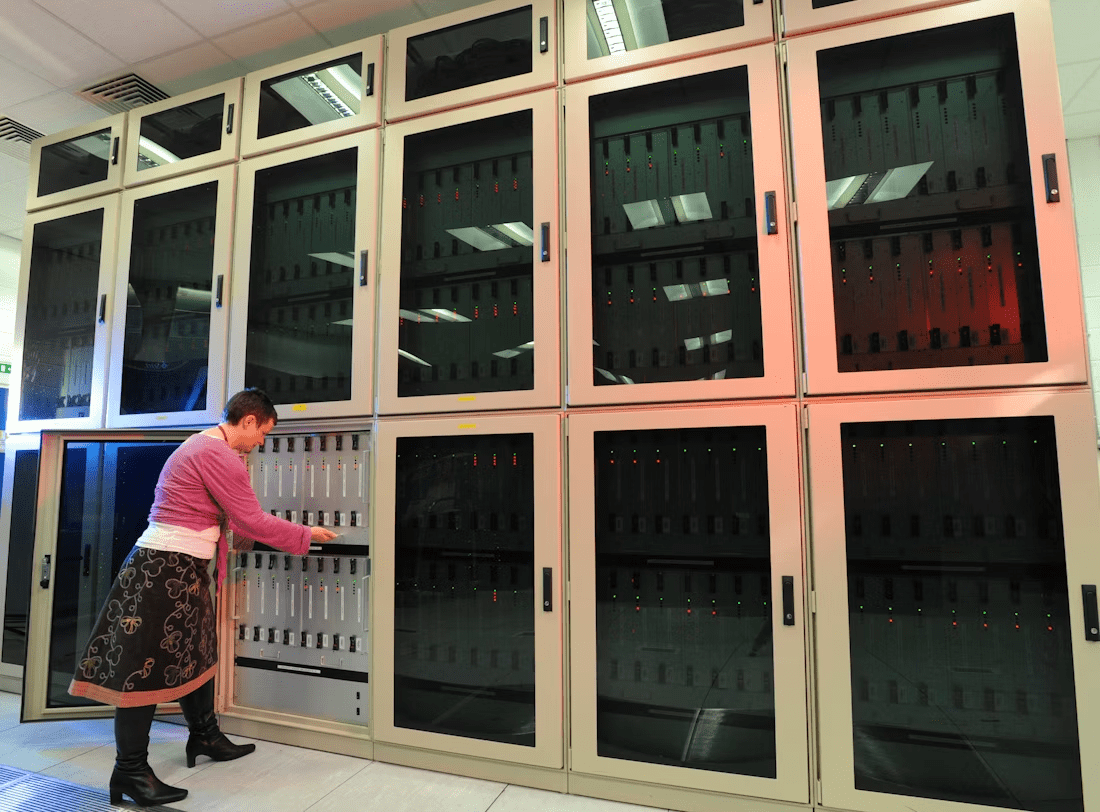
In the elite world of supercomputing, QCDOC stood out for its razor-sharp focus and profound scientific mission. Built specifically to decode the calculations that underpin our understanding of matter and the early universe, the system earned its reputation as one of the most vital tools in lattice quantum physics. Read more about the machine that helped unravel the mysteries of the world’s structure on edinburgh-future.
The origins and evolution of QCDOC
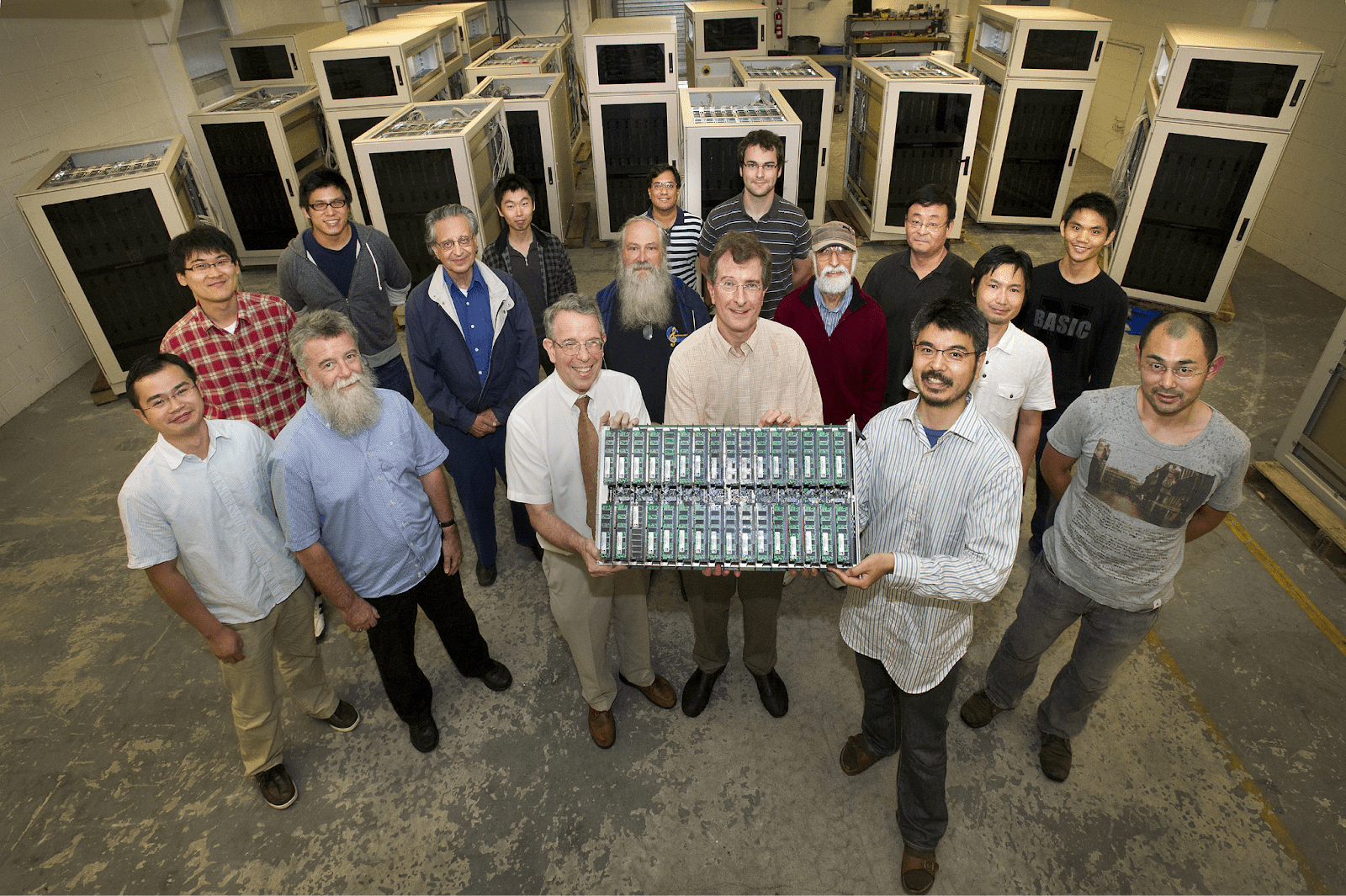
The QCDOC supercomputer was born from a high-level international collaboration between the University of Edinburgh (via the UKQCD consortium), Columbia University, RIKEN BNL, Brookhaven National Laboratory, and IBM. Unlike general-purpose computers, it was designed as a precision instrument for a specific, formidable task: solving the complex equations of Quantum Chromodynamics (QCD)—the theory describing how elementary particles interact within an atomic nucleus.
The system was officially unveiled on 26 May 2005 at Brookhaven National Laboratory. The project, which took three years to design and assemble, carried a price tag of approximately $5 million. Compared to its predecessor, the QCDSP (in use since the late 1990s), QCDOC represented a quantum leap in processing speed and scale. Together, these two machines provided physicists with what was then the world’s most formidable computing power dedicated to QCD research.
Once installed at the University of Edinburgh, QCDOC boasted 12,288 processors and a peak performance of 10 teraflops. Its hardware was a marvel of engineering: 192 motherboards, thousands of serial cables, and dozens of network switches. It was this intricate architecture that allowed for exceptional scalability, enabling researchers to toggle between using a few processors or the entire system’s raw power depending on the task at hand.
Taku Izubuchi, head of the RBRC computing group, noted that until 2008, nearly all lattice physics research at RBRC was conducted on QCDOC and its predecessor. This unique synergy benefited scientists across Japan, the UK, and the US. The technology even paved the way for the IBM Blue Gene/P supercomputer, installed in 2008 at Argonne National Laboratory, where the US QCD group utilised nearly a quarter of its resources for their calculations.
Although QCDOC was officially decommissioned in 2011, its legacy lived on through the next-generation project: QCDCQ. Building on their previous success, the international partners began developing an even more powerful specialised machine. Focused on chiral quark calculations, QCDCQ aimed for a sustained performance of 75–150 teraflops—a level of power essential for maintaining global leadership in lattice quantum chromodynamics.
A legacy of scientific breakthrough
QCDOC remains a textbook example of how a specialised supercomputer can revolutionise an entire field of science. Its contribution was measured in scientific breakthroughs; the machine facilitated a series of “world-first” calculations that significantly expanded our understanding of the processes studied at the Relativistic Heavy Ion Collider (RHIC). By shedding light on the fundamental properties of matter and the extreme conditions of the infant universe, QCDOC secured its place as a landmark achievement in the international scientific community. Beyond its immediate physical results, the project established a blueprint for international academic-industrial partnerships that continues to drive supercomputing innovation today. Furthermore, the architectural principles pioneered by QCDOC paved the way for more energy-efficient designs in modern high-performance computing clusters.