

Murrayfield Stadium is one of Edinburgh’s most iconic landmarks. With a seating capacity of 67,144, it is the fifth-largest stadium in the United Kingdom. As the home of the Scottish Rugby Union (SRU), it is primarily used for thrilling rugby matches, but it also occasionally hosts football games and major music concerts. Learn more at edinburgh-future.
But beyond the roaring crowds and high-stakes games, Murrayfield holds a rich and unique history that stands as a cornerstone of Edinburgh’s entire sporting past. For anyone interested in the history of world sport, the story of Murrayfield is packed with fascinating moments.
How It All Began
The stadium’s story began when the Scottish Rugby Union purchased a 19-acre plot of land and began construction on a main stand and three embankments. Under the watchful eye of groundsman Arthur Seller, the pitch was prepared for its debut. The first match was held on 21 March 1925, a momentous game in the Five Nations Championship.
The Difficult War Years
When the Second World War broke out, the stadium grounds were requisitioned by the army and used as a supply depot. Although matches were held intermittently during the war, they were rare events and became a real spectacle for the public. After the war, the stadium returned to its primary role as a rugby venue. The first post-war game to thrill spectators was a match between England and Scotland.
The Record
On 1 March 1975, the stadium witnessed its record attendance. A staggering 104,000 people packed into the ground that day to see Scotland win the 1975 Five Nations Championship. Remarkably, this attendance figure remained a world record until 1999.
Reconstruction and Modernisation
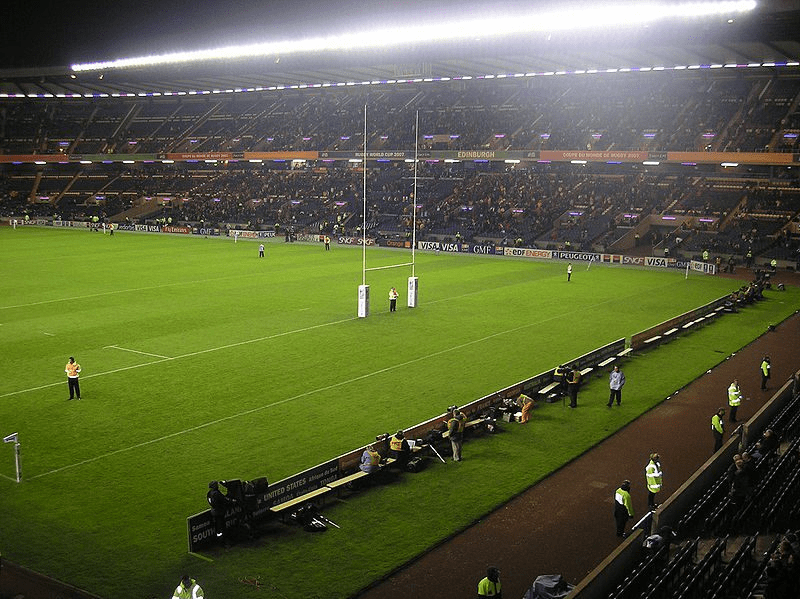
October 1991 saw the launch of another debenture scheme to fund a complete redevelopment of the West Stand. The new stand was designed with a striking 48-metre cantilever roof. The year 1994 marked a period of major expansion and improvement for the stadium. The modernisation was a complex and costly project, with a total budget of approximately £50 million. One of the most significant achievements of this large-scale redevelopment was the installation of floodlights. This was a true sensation at the time, as such powerful lighting was not yet a standard feature in every stadium.