Sheila Scott Macintyre was a mathematician whose vision was far ahead of its time. Her pioneering research into interpolation series, the Whittaker constant, and generalised integral transforms laid the theoretical groundwork for methods now essential to numerical analysis and digital technology. It is this enduring relevance that keeps her name at the forefront of modern scientific discourse. Read more about the scientist whose formulas live in every modern gadget on edinburgh-future.
Early Life and the Academic Journey of Sheila Scott Macintyre
Born in Edinburgh on 23 April 1910, Sheila Scott began her education at Trinity Academy before attending the Edinburgh Ladies’ College from 1926 to 1928. Her academic brilliance soon saw her secure a place at the University of Edinburgh, followed by three years at Girton College, Cambridge—then one of the few institutions open to women. During the final stages of her studies, the young scholar began researching under the guidance of the renowned mathematician Mary Cartwright. This collaboration resulted in her first major publication, On the Asymptotic Periods of Integral Functions, released in 1935.
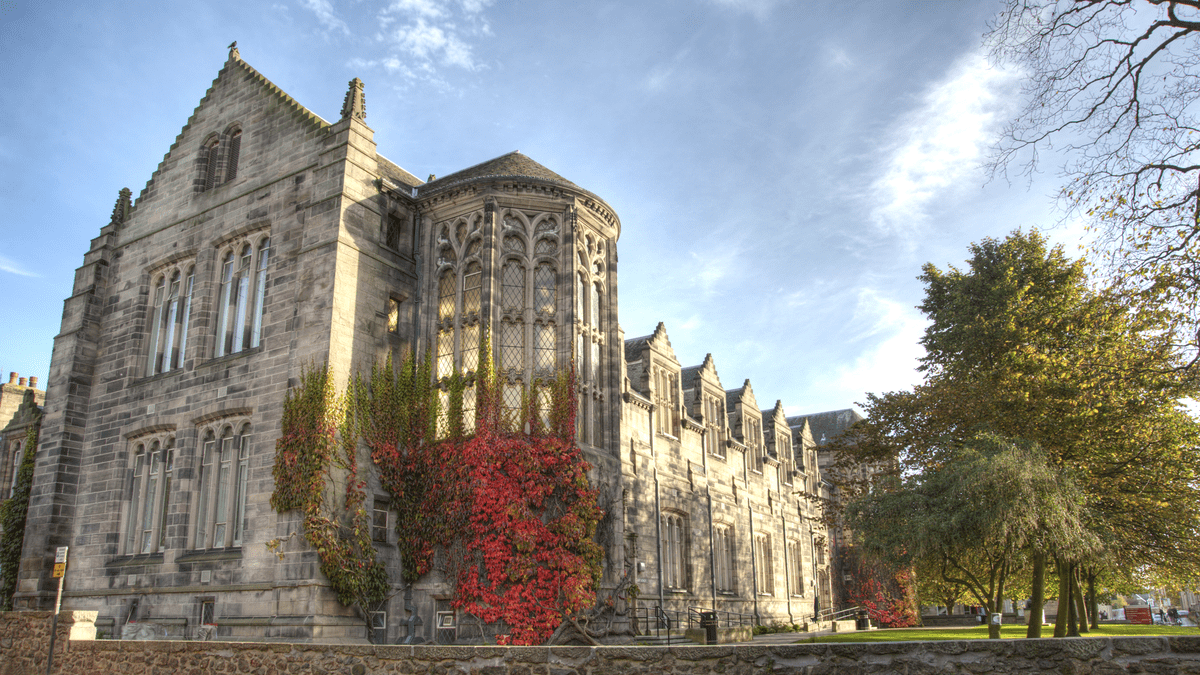
Upon returning to Scotland in 1934, Macintyre pursued a teaching qualification and spent five years working in various schools. A significant portion of this time was spent at St Leonards School in St Andrews, a prestigious independent school housed within the historic buildings of a former university college. Her teaching career later took her to London, where she briefly taught at James Allen’s Girls’ School, the oldest independent girls’ school in the country.
In 1940, Sheila married fellow mathematician Archibald James Macintyre. A year later, she was appointed assistant lecturer at the University of Aberdeen, where her husband also worked. As the Second World War saw many male lecturers called up for service, Macintyre stepped in to cover university courses while simultaneously driving her own research forward. Balancing the rigours of academia with family life and motherhood, she completed an ambitious scientific project, successfully defending her doctoral thesis at Aberdeen in 1947 under Edward Maitland Wright. Her work on interpolation functions immediately caught the attention of specialists in the field.
Between 1947 and 1958, Macintyre published ten seminal papers. Her primary focus remained the theory of functions of a complex variable. By the late 1940s, she was systematically contributing to this field, specifically targeting interpolation series related to analytic functions. Later in her career, she introduced an original integral transform, using a kernel derived from the classic Laplace transform through a process involving fractional differentiation.
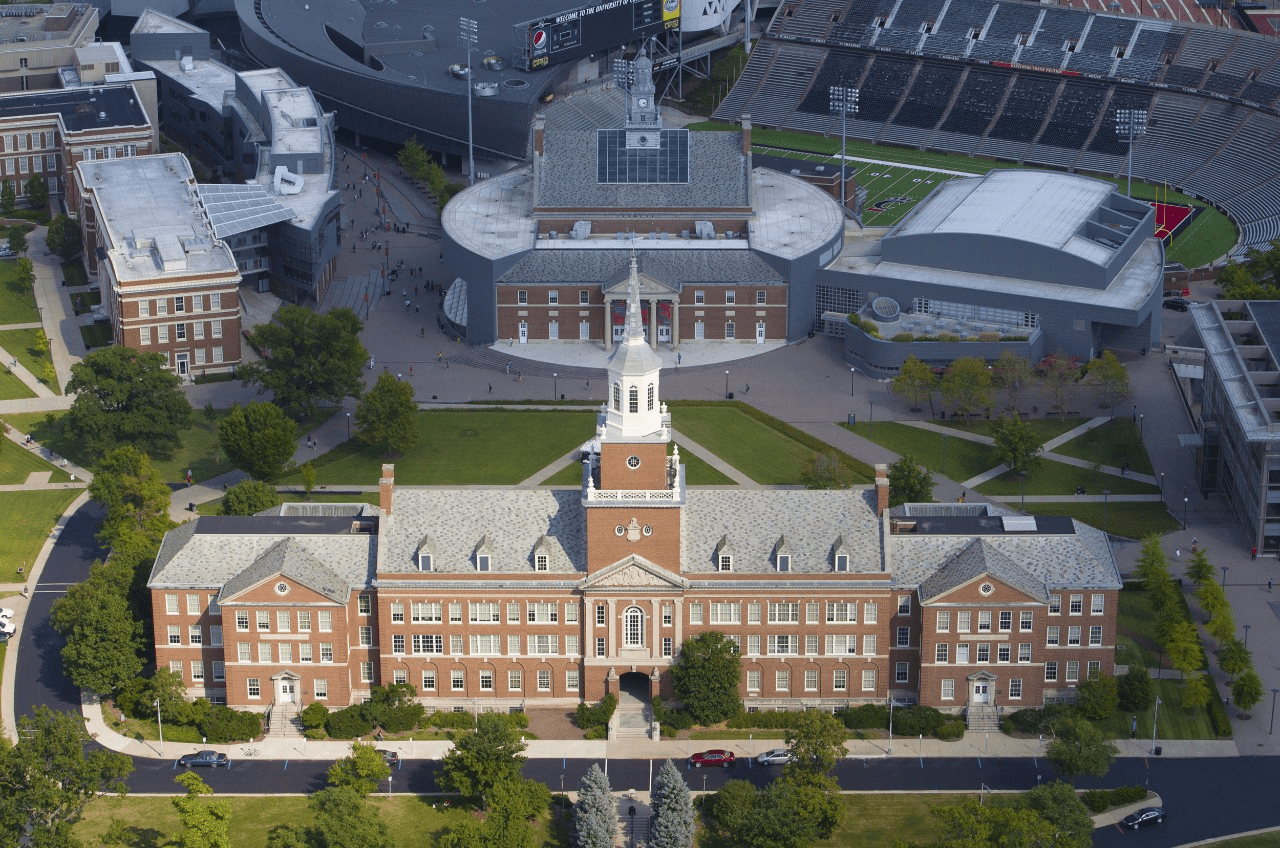
A new chapter began in 1958 when the Macintyres accepted invitations to serve as visiting research professors at the University of Cincinnati. Although they briefly returned to Aberdeen after a year, by the autumn of 1959, it was clear their future lay in the United States. In Cincinnati, Macintyre quickly earned a reputation as a brilliant educator. Her lectures were celebrated for their precise structure, student-centred approach, and her unique ability to demystify complex abstract concepts. Tragically, Sheila Scott Macintyre passed away in Cincinnati on 21 March 1960, following a battle with breast cancer.
Recognition and the Impact of Her Discoveries
The legacy of Sheila Scott Macintyre—defined by her research, pedagogical talent, and multilingual scientific contributions—extends far beyond pure mathematics. Her work on complex variables provided the mathematical toolkit necessary for numerical methods, signal processing, and the theoretical foundations of algorithms. The structures she studied—such as series convergence, error estimation, and the properties of analytic functions—are the very building blocks of computerised calculation and modelling. Without these foundations, the sophisticated IT systems we rely on today would simply not exist.