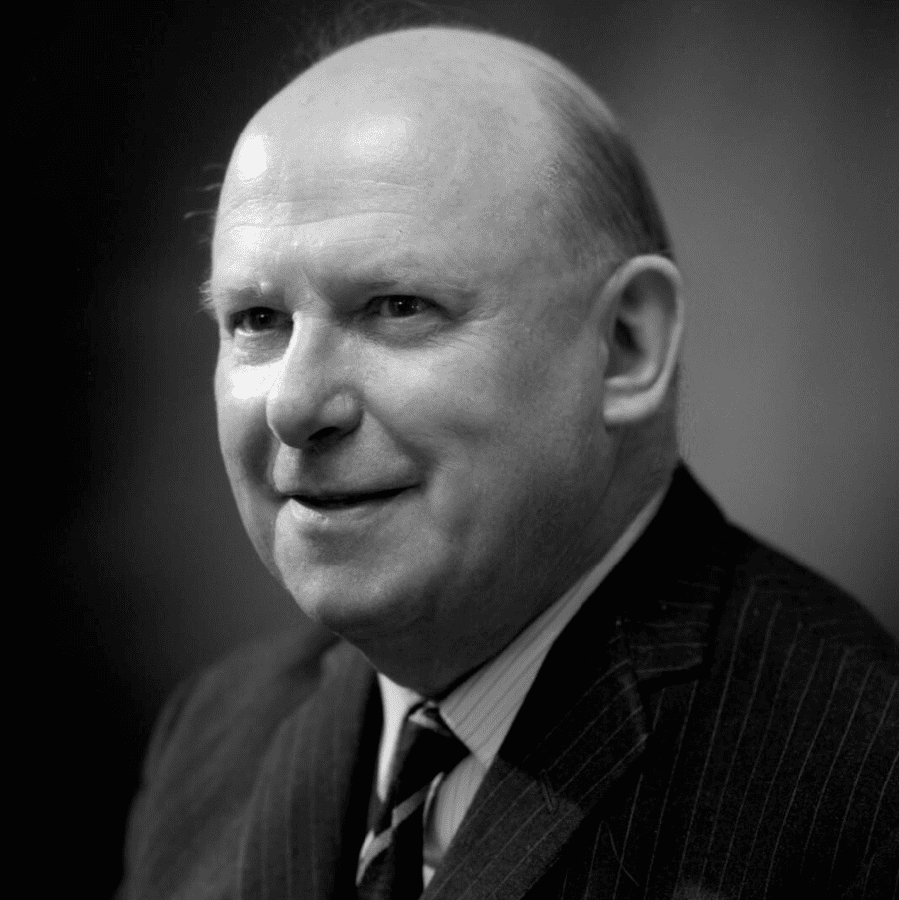
The name William Hodge stands as a pillar in the history of modern mathematics. It was his groundbreaking work that fundamentally reshaped our understanding of the relationship between geometry and topology. Indeed, his theories paved the way for the methods currently underpinning data analysis and digital technologies. Read more on edinburgh-future.
Early Life and the Academic Path
William Hodge was born on 17 June 1903 in Edinburgh. Following his early years, he entered the prestigious George Watson’s College in 1909, where he studied until 1920. During his school days, the young Hodge was defined by his diligence and tenacity. This focus held a particular significance for him: while his father and brother were brilliant golfers, William lacked any flair for the sport. acutely aware of this, the young enthusiast decided to make education his primary arena for success, resolving to exploit his intellectual capabilities to their fullest.
In June 1920, Hodge successfully passed the competitive entrance exams for a scholarship, opening the doors to the University of Edinburgh. Although he had rarely been the undisputed leader during his school years, university was where his talent truly came into its own. He consistently topped the class in mathematics, whilst simultaneously attending courses in English, Economics, and Physics. The decisive moment for the undergraduate came during the special mathematical competition for the John Welsh Scholarship. It was here that he truly distinguished himself, taking first place.
Hodge graduated from Edinburgh University in 1923 with First Class Honours. That same year, he entered St John’s College, Cambridge. By 1926, the young academic had taken up a post as an Assistant Lecturer at the University of Bristol, where he spent the next five years. This period marked the active commencement of his scientific career and the publication of his research. The culmination of this era was a seminal 1930 paper that brought him international acclaim. In this work, he creatively applied topological ideas—proposed by Solomon Lefschetz in 1929 for investigating integrals on curves—to a new frontier. Expanding on these approaches, Hodge managed to solve a complex problem regarding integrals on surfaces, originally posed by the Italian mathematician Francesco Severi.
Returning to England after a stint in the United States, Hodge settled back in Cambridge in 1932. The city would become the central hub of his scientific and teaching life. By 1933, he was recognised as a lecturer, and in 1935, he was elected a Fellow of Pembroke College. Following this, the academic was appointed to the prestigious Lowndean Chair of Astronomy and Geometry at Cambridge, succeeding Henry Baker. It was during this time that he forged a deep conceptual unity between geometry, mathematical analysis, and topology. This synthesis formed the foundation of his most famous works on the theory of harmonic integrals, determining the future trajectory of these mathematical fields.
After the Second World War, William Hodge’s international authority continued to grow. In 1950, he visited Harvard University, spending a year as a lecturer at the invitation of Oscar Zariski. In his later years, he increasingly balanced his scientific work with high-level administrative roles. From 1958 to 1970, he served as the Master of Pembroke College, and from 1959 to 1965, he acted as Vice-President of the Royal Society—one of the UK’s most prestigious scientific institutions. William Hodge passed away in Cambridge on 7 July 1975.
Recognition and the Legacy of Discovery
William Hodge’s scientific achievements laid deep theoretical foundations that defined the development of modern algebraic and differential geometry, whilst significantly influencing the formation of topological thinking in mathematics. His results have become vital tools for industries that today underpin information technology. Methods relying on topological invariants and geometric structures are now actively utilised in computer graphics, signal processing, machine learning, and data analysis. For his immense contributions, he was honoured with honorary degrees from the universities of Edinburgh, Bristol, Leicester, Sheffield, Wales, and Liverpool, and was elected a foreign associate of the US National Academy of Sciences.