EPCC stands as the UK’s first National Supercomputing Centre and remains one of Europe’s most influential hubs for High-Performance Computing (HPC). Its work seamlessly blends the operation of mission-critical systems with cutting-edge research and industrial technology transfer. This prestigious standing is the result of over thirty-five years of consistent innovation and growth. Read more about where solutions to the most complex challenges in science and business are born on edinburgh-future.
A Legacy of Innovation: The Origins of EPCC
The seeds of EPCC were sown in the 1980s at the University of Edinburgh, where a forward-thinking group of academics began to see parallel computing as the key to scientific breakthroughs. Driven by Physics faculty members David Wallace, Stuart Pawley, and Ken Bowler, the initiative aimed to harness new computational methods for complex physical problems. The arrival of the city’s first computers, alongside two ICL Distributed Array Processors (DAP), sparked a period of intensive research.
In September 1990, the Edinburgh Parallel Computing Centre (EPCC) was officially launched. Backed by the Department of Trade and Industry, its mission was to champion these technologies across both industry and academia. While the end of initial government funding posed a challenge for the young organisation, it also triggered a wave of commercial success. This era saw the birth of key spin-outs, including data analytics firm Quadstone Ltd and traffic modelling specialists Paramics Ltd. Not long after, the centre secured its first national contract to provide HPC services for the Cray T3D system.
The 2000s marked a phase of rapid expansion. EPCC attracted fresh government investment into e-Science, launched a Master’s programme in High-Performance Computing, and became an official PRACE training hub. Securing the contract for HPCx—the UK’s national supercomputing service—solidified its long-standing partnership with the Engineering and Physical Sciences Research Council (EPSRC). This momentum continued through successive flagship projects, HECTOR and ARCHER.
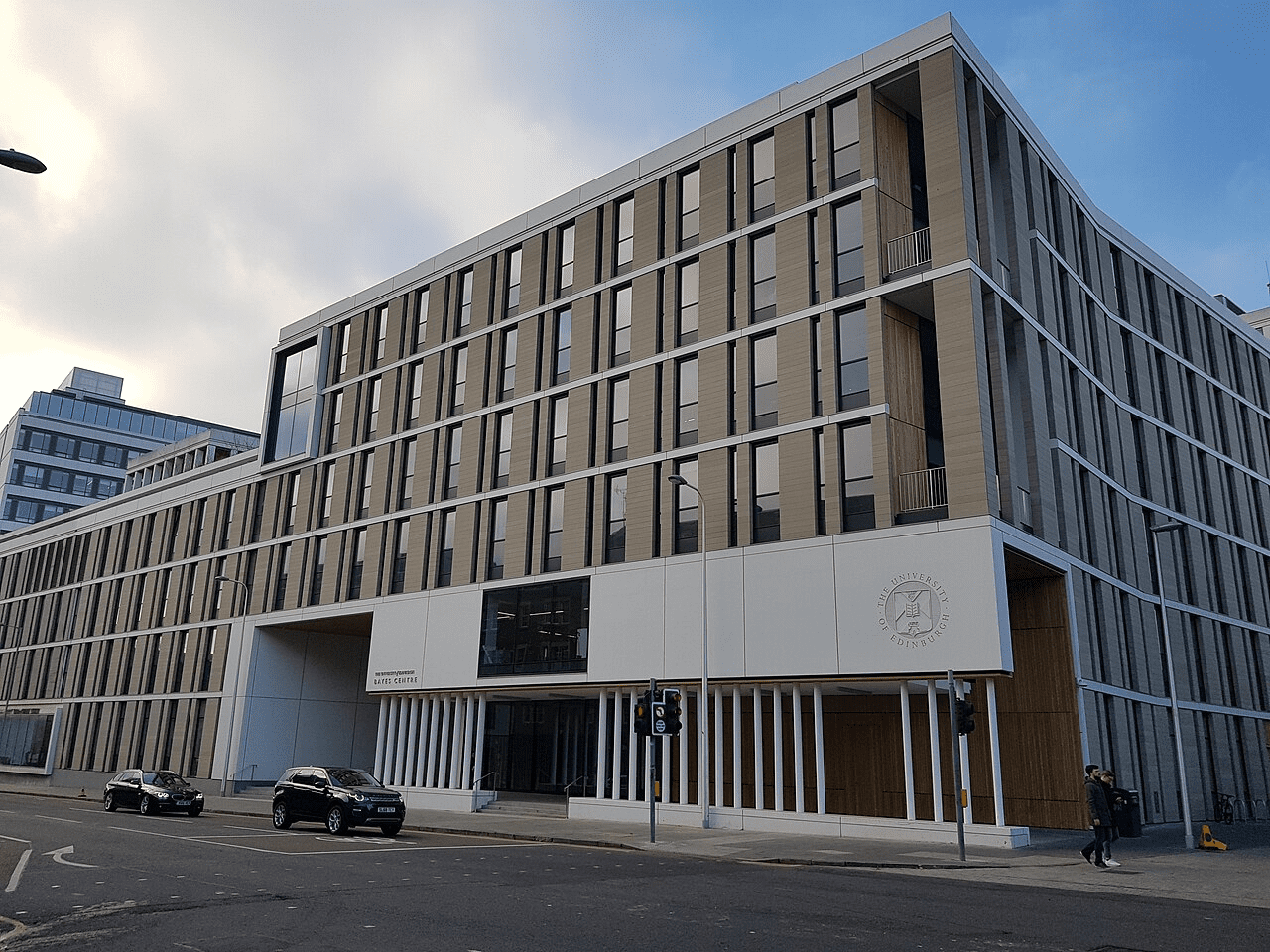
In 2018, EPCC took over the hosting and operational management of the Edinburgh International Data Facility. This infrastructure is a cornerstone of the £600 million City Deal investment programme. After decades at the King’s Buildings campus, the centre moved its headquarters to The Bayes Centre. Occupying a dedicated floor in a building designed for data-driven innovation, EPCC now sits at the heart of a vibrant ecosystem where researchers, startups, and industrial partners collaborate. By 2019, its role was further cemented as the operator of ARCHER2, the UK’s primary National Supercomputing Service.
In July 2025, EPCC was formally designated as the UK’s first National Supercomputing Centre. This milestone capped 35 years of institutional stability and a relentless ability to adapt to the shifting technological landscape. By October, the centre was confirmed as the UK’s AI Factory Antenna (UKAIA)—a key component of the EuroHPC programme designed to accelerate industrial research and practical AI applications.
The Global Impact of EPCC
EPCC occupies a unique position in the British scientific landscape. From its earliest days, it pioneered an entrepreneurial approach within a university setting, proving that computational science is a strategic national asset. Today, it provides world-class computing and data services, ranging from the operation of the ARCHER2 supercomputer and the Cirrus Tier-2 HPC system to managing the Scottish National Data Safe Haven. These facilities are the backbone of advanced research in science, engineering, medicine, and economics, ensuring the UK remains at the forefront of the global data revolution.