

In centuries past, town squares and markets were the heart of public life. They were bustling hubs for exchanging news, sharing local gossip, and, of course, for trade. In Edinburgh, the Grassmarket has long been such a place. Far from losing its character over the centuries, it has become even more vibrant and popular. Its ancient walls and cobblestones have witnessed everything from joyous celebrations to public executions. So, what is it that makes the Grassmarket so captivating? Learn more at edinburgh-future.
History and Location
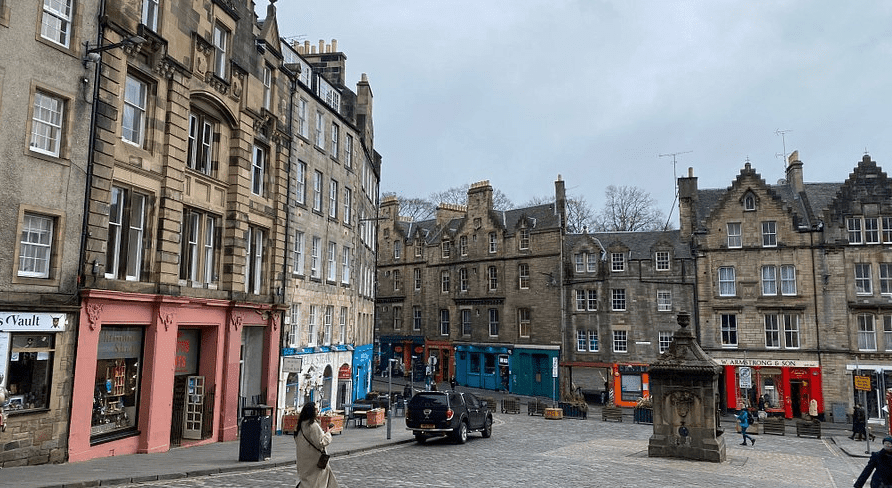
The Grassmarket is not just a historic market; it’s an entire street and event space in Edinburgh’s Old Town. The area sits in a hollow, noticeably lower than the surrounding parts of the city. Nestled beneath Edinburgh Castle, it forms a key part of a major thoroughfare running from west to east through the city centre.
The earliest records of the Grassmarket date back to 1422. In those days, it was Edinburgh’s main marketplace, dominated by traders selling horses and livestock. Buying a horse from the Grassmarket was considered prestigious, and the animals sold here were known for their high quality. From the 1800s, the area’s character began to change with the arrival of Irish immigrants. They needed somewhere to live, and over the following decades, numerous tenements were built around the market. This could hardly be called proper housing; the living conditions were appalling. For instance, one lodging house packed 70 people into 27 small, toilet-less rooms. Until the 1980s, the area was known as a refuge for the homeless and destitute. It wasn’t until the 2000s that the Grassmarket’s reputation was transformed, thanks to significant regeneration efforts by the Edinburgh city council to improve this central district.
Trade, Entertainment, and Executions
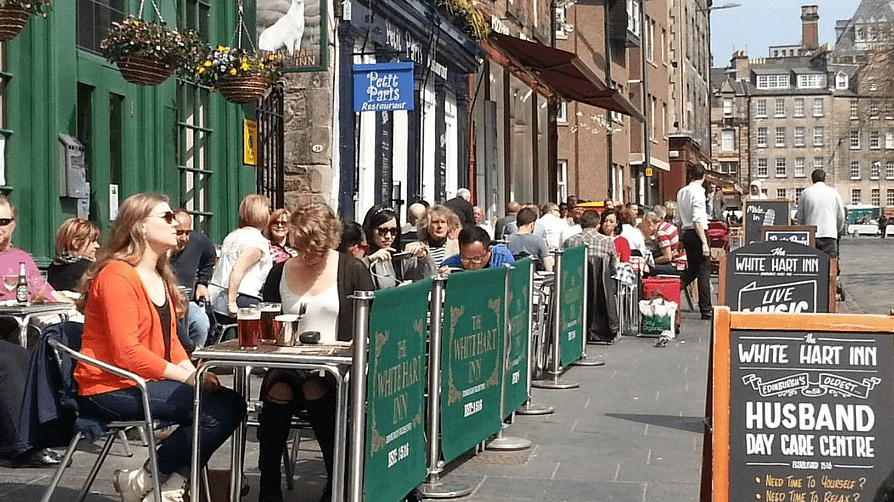
Today, the Grassmarket is one of Edinburgh’s most vibrant promenades. Trade still thrives here, just as it did in the past. Of course, you can no longer buy a horse or a cow, but you’ll find souvenirs and farm-fresh produce in abundance. This is a key reason why the Grassmarket is so popular with tourists. Additionally, nearly every building seems to house a small pub. The most famous of these is ‘The Last Drop’. Its name comes from a grim story from its past. The story goes that in the 16th century, this pub had a tradition of serving a final mug of ale or whisky to those on their way to the gallows.
The buildings that once provided shelter for immigrants and the poor have been renovated into cosy and modern hostels, hotels, and apartments. Everything is set up to ensure visitors have a comfortable and enjoyable stay in the Grassmarket area. In 2009-10, a major project was undertaken to improve the streetscape of the market and its surrounding area. This resulted in a more pedestrian-friendly space with expanded areas for relaxation and public events.
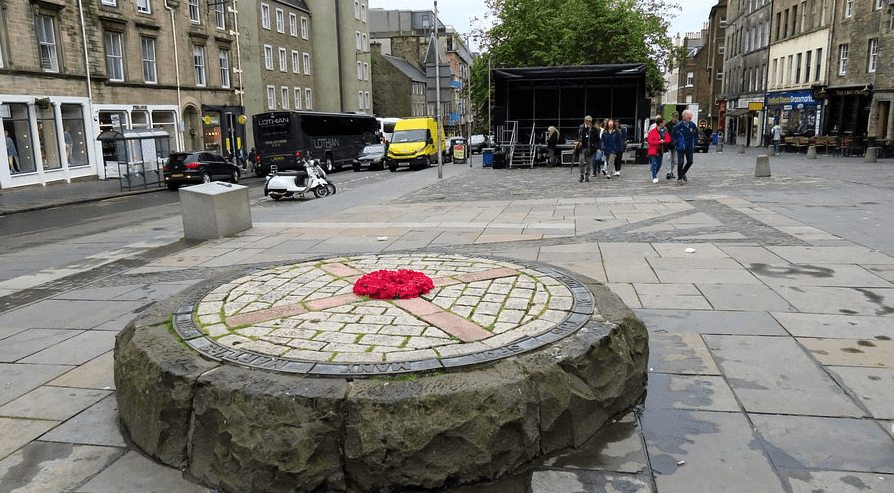
A circular stone serves as a reminder of the market’s darker past. It marks the spot where the gallows stood in the 16th and 17th centuries. Installed in 1937, it acts as a memorial to those who were executed by hanging in this square. The names of the executed can be read on nearby plaques. Locals might share vivid tales about some of those who met their end in the Grassmarket. Furthermore, famous writers like Daniel Defoe and Sir Walter Scott feature the Grassmarket in their works.
The Grassmarket is also famous for its nightlife. The area’s cafes, pubs, and restaurants offer something for everyone, whether you’re looking for entertainment or a quiet spot to relax. For an unforgettable Edinburgh experience, a visit to this remarkable place is an absolute must!